Bank Leverages Investment in Microsoft 365 with Teams Phone and CoreEngage Contact Center
How Forcht Bank cut costs, strengthened business continuity, and modernized communication across 22 banking centers with Microsoft Teams Phone and CoreEngage from Altigen and Fiserv.
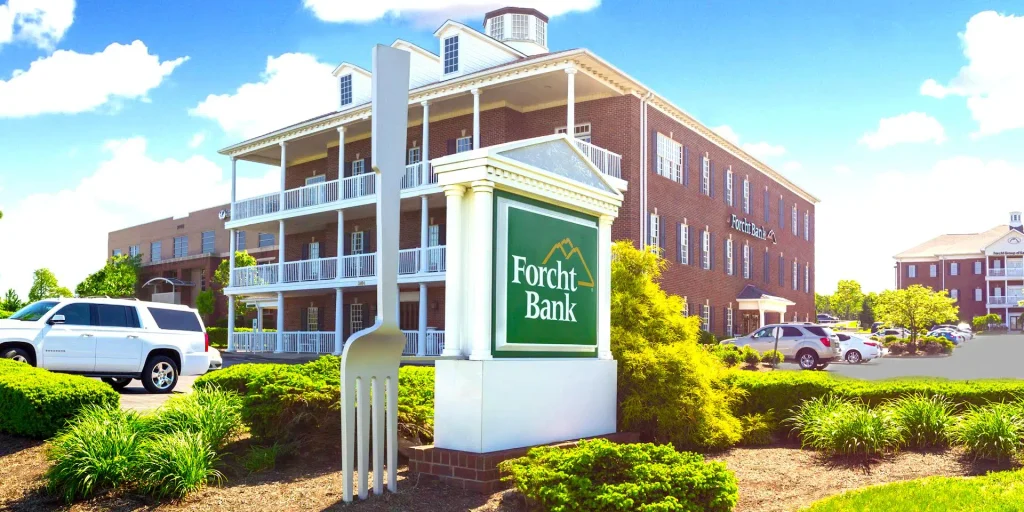
Forcht Bank built its reputation on personal, relationship-driven service. They recognize the importance of change in the banking industry and are constantly evolving to better serve their customers. This core value is why the bank replaced its legacy phone system with Microsoft Teams Phone and CoreEngage, Altigen’s native Teams contact center solution. The result was a modern communications platform that reduced costs, strengthened business continuity, and improved collaboration across all 22 banking centers.

“ The transition saved us a considerable sum of money. We modernized our communication methods across the entire bank and increased the number of ways in which we can communicate and collaborate. ”
– Chip Clements, Chief Technology Officer, Forcht Bank
| At a glance | |
| Customer | Forcht Bank, Corbin, Kentucky |
| Industry | Banking (privately held, founded 1985) |
| Footprint | 250+ employees, 22 banking centers across Kentucky and Cincinnati |
| Challenge | Legacy desk phones, a location-bound call center, and rising expectations for continuity and collaboration |
| Solution | Microsoft 365, Microsoft Teams Phone, and Altigen CoreEngage contact center, delivered by Altigen and Fiserv |
| Results | Reduced communications expenses; work-from-anywhere continuity; a decentralized contact center; bank-wide adoption of Teams chat and meetings |
About Forcht Bank
Terry Forcht founded Forcht Bank in Corbin, Kentucky, in 1985. Four decades later, it is one of the largest privately held banking groups in the state, with more than 250 employees and 22 banking centers across Kentucky and Cincinnati.
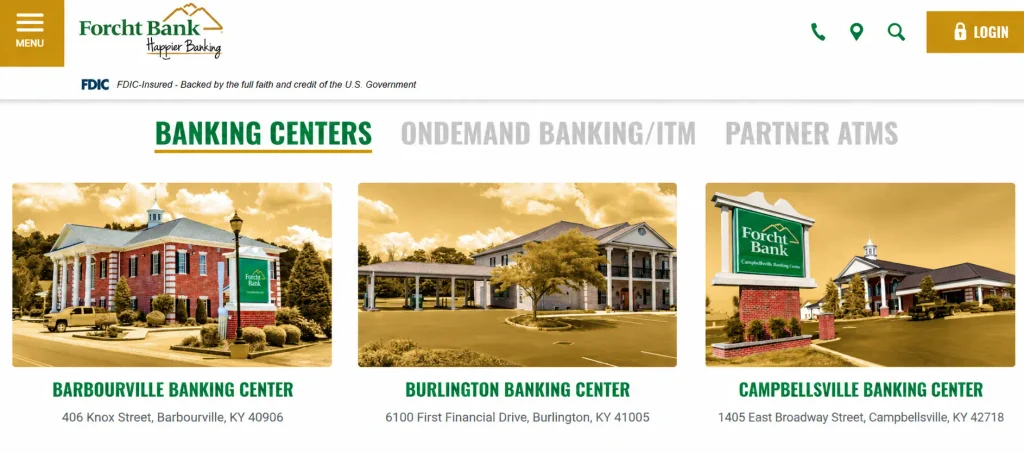
The bank has stayed true to its founding principles of customer respect, competitive rates, and community service. Its mission is to consistently exceed customer expectations by pairing personal service with technology that makes banking easier, simpler, and faster. A culture that values change and continuous improvement drives the bank to give its teams better tools to connect with customers and with each other, regardless of the branch or office they work from.
The challenge: tradition meets a changing world
For years, employees picked up a physical desk phone for every call and dialed into conference calls from their desks. That model tied customer service and communication to a specific location.
The pandemic changed how the bank thought about risk. Leadership became keenly focused on disaster recovery and business continuity, and on what happens when a single site goes down. A broken pipe, a failed air conditioning unit, an internet outage, or a Kentucky tornado could send staff home and disrupt customer service.
At the same time, the bank had already implemented Microsoft 365. “We’re a huge Microsoft shop and we leverage as many Microsoft products as we can,” says Chip Clements, Chief Technology Officer.
The solution: one Microsoft platform, delivered by Altigen and Fiserv
Forcht Bank modernized its communications environment by standardizing on Microsoft 365, adopting Teams Phone, and deploying the CoreEngage contact center. Altigen, a provider of customer engagement solutions, worked with Fiserv to deliver the project.
Teams Phone: staying inside the ecosystem
Because Forcht Bank had already implemented Microsoft 365 and Microsoft Defender, Microsoft Teams Phone fit naturally into its existing technology and security strategy, eliminating the need for custom integrations while providing access to Microsoft’s ongoing innovation.
“Teams Phone was an easy decision for us to stay embedded in that ecosystem,” he says. “The way everything interacts together is critical, without having to build custom APIs or custom integrations with third-party systems.”
He also valued Microsoft’s pace of innovation. “No one has the size, the scope, and the ability to enhance their products like Microsoft does.”
CoreEngage: a contact center that lives in Teams
Because CoreEngage runs natively within Teams, agents can manage customer interactions from a single interface. “Our call center staff stay within one system and work within one system,” says Clements. Hiring and retraining are easier too, since agents already use Teams every day.
Guidance from Altigen and Fiserv
Altigen and Fiserv managed the project together. “The deployment itself was extremely well organized,” Clements says. “The entire team was very knowledgeable. They were well directed and clearly had a plan.” Their subject matter experts guided the bank and, in his words, “made us feel comfortable that we made the right decision and were on the right path.”
Altigen also handled the complexity of bringing the bank’s affiliated businesses into the new phone environment. “Altigen has been very, very receptive to any feedback and very responsive to our needs,” Clements says. “Having a partner that’s going to support us as we expand or change or modernize is extremely vital, and it carries a lot of weight with my future decisions.”
The results: lower costs, stronger continuity, a new way of working
Considerable cost savings
The move reduced expenses while expanding capability. “The transition saved us a considerable sum of money,” says Clements. “From an executive perspective, we reduced expenses. We modernized our communication methods across the entire bank and increased the number of ways in which we can communicate and collaborate.”
Business continuity and a resilient contact center
Teams Phone enabled employees to work and communicate from virtually any location, reducing dependence on a single office or branch. Employees can take calls and hold Teams meetings from anywhere, so a localized issue doesn’t stop work. CoreEngage extends that resilience to the contact center, letting the bank spread agents across multiple locations and time zones. “If there is an internet outage or a tornado, it may affect one area, but our agents are geographically dispersed for this reason,” Clements said. “With Teams Phone, it doesn’t stop our ability to work and provide service to our customers.”
Bank-wide collaboration
Across all 22 locations, the way people work together has changed “tremendously,” according to Clements. Teams chat is used heavily throughout the bank from top to bottom. Conference calls formerly dialed into from physical desk phones have given way to Teams meetings with headsets, screen sharing and live collaboration.
The change was significant for long-tenured staff. “Employees were used to picking up a physical phone, bound to a desk their entire career, and then all of a sudden, we’ve modernized the environment and changed communication methods,” Clements says. “Our employees did remarkably well. There’s a little pain to start with, but if you have good leadership and relationships with good vendors like Altigen and Fiserv, they can smooth out the transition.”
Advice for other banks
Clements encourages institutions already on Microsoft 365 to move quickly, especially those running legacy on-premises phone systems. “The cost of ownership for legacy phone systems is significantly more than what it would cost to transition to Teams Phone and CoreEngage,” he says. “The benefits of Teams Phone far outweigh any concern with user engagement, pain points, or anything else someone can come up with as a reason not to do it.”
His guiding question sums up the bank’s approach: “Can we think of a reason why it can be done instead of a reason why it can’t be done?”
Looking ahead: AI at the first touch point
With its communications foundation in place, Forcht Bank is now evaluating how AI can improve customer service, increase self-service capabilities and reduce routine call volume. “We’re interested in ways AI could be used as a first touch point in the call center environment,” Clements says. A customer could speak with an AI agent that answers common questions, then transfer to a live agent when needed.
The bank already uses the ConvergeIT IVR bank-by-phone application from Fiserv and Altigen, used by more than 1,500 banks and credit unions. The application now includes conversational AI, giving customers access to information 24/7. Forcht Bank will evaluate how this capability can reduce calls that would otherwise reach the contact center.
The bank also plans to evaluate a new compliance recording solution from Altigen and Fiserv that automatically analyzes every customer conversation.