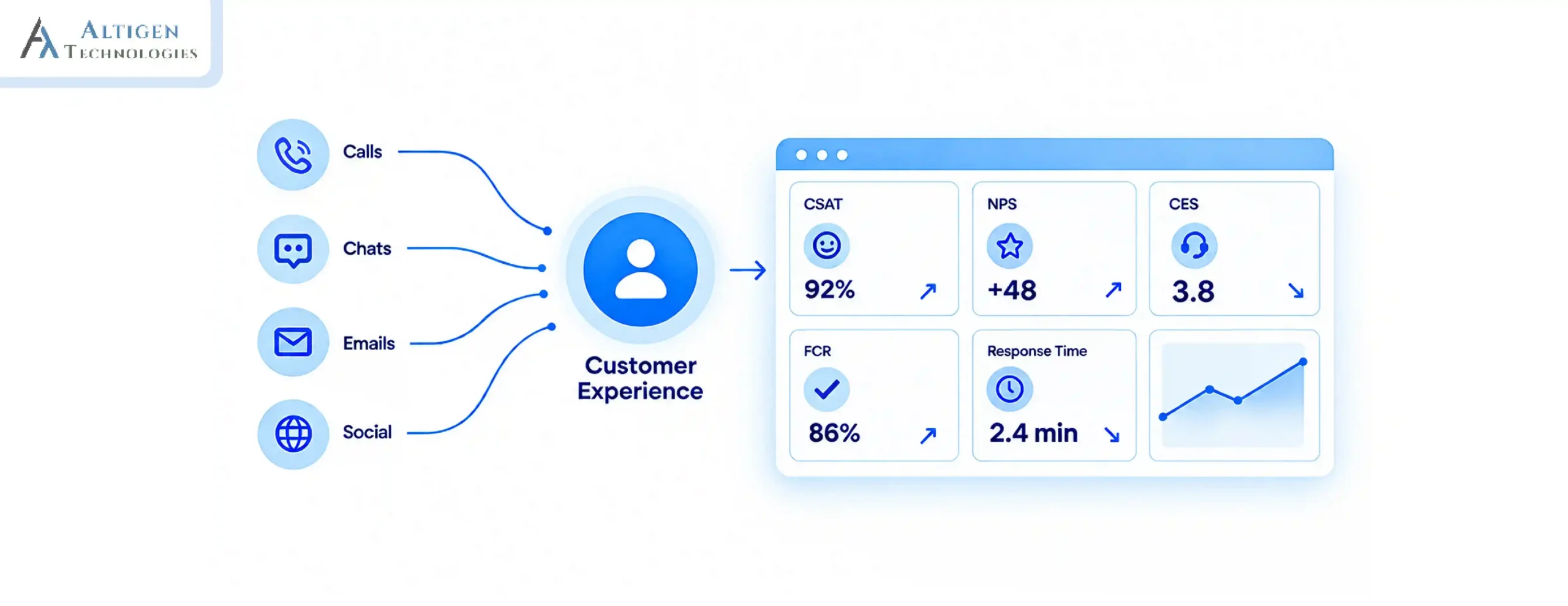
A customer explains their problem once, gets transferred, and explains it to the next agent again. The agent handled a tricky billing dispute so well that the customer was satisfied and stayed for another three years. But no one on the team ever heard how they did it. Similarly, a required disclosure was skipped by an agent, and the company found out during a regulatory audit months later.
None of these insights were reflected in the dashboard. The conversations were recorded and filed away but rarely opened again.
Conversation intelligence software analyzes every interaction instead of a small sample and turns conversation data into clear actions for supervisors. It identifies coaching opportunities and flags compliance risks, helping contact center managers address critical issues before they affect another customer. In this guide we compare the top conversation intelligence software for contact centers.
| TL;DR – A Quick Takeaway 1. What contact center conversation intelligence tools do: Analyzes voice and digital interactions to identify intent, sentiment, compliance risks, agent performance, and recurring customer issues. 2. Top conversation intelligence solutions: Altigen CoreEngage, NICE CXone, Observe.AI, Talkdesk, Dialpad, Genesys, and CloudTalk, across use cases, features, pricing, strengths, and limitations. 3. What to consider when choosing: Interaction channel support, customizable scorecards, integrations, security, scalability, and pricing models before choosing a platform. |
What is conversation intelligence software for contact centers?
Conversation intelligence software is an AI-powered technology that analyzes customer interactions across voice and digital channels to understand what has been discussed and how customers respond. It can identify customer intent, sentiment, reasons for recurring contact, compliance issues, and agent performance patterns, giving supervisors information they can act on.
The core capabilities of conversation intelligence software for contact centers include:
- Transcribe conversations across channels
- Identify topics and customer intent
- Detect sentiment and emotional shifts
- Score interactions against quality criteria
- Flag compliance issues
- Generate interaction summaries and dispositions
- Analyze large volumes of interactions
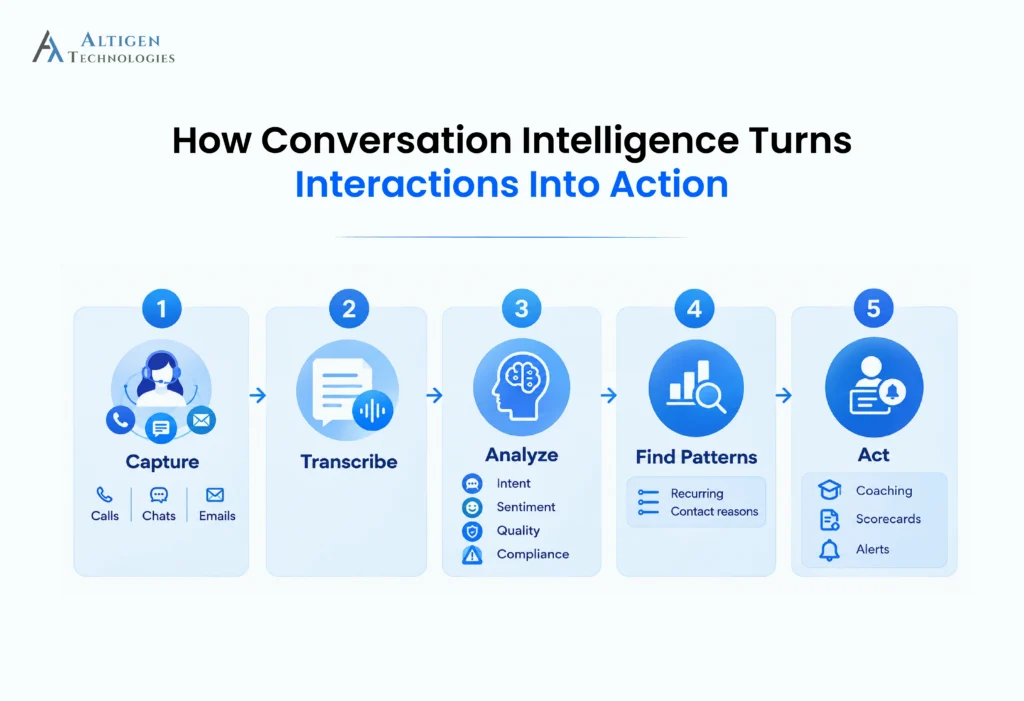
The workflow runs in five stages. Capture the interaction, transcribe it, analyze the content, identify patterns across the full volume, then act on what surfaces.
What are the top conversation intelligence software for contact centers?
Here is a list of conversation intelligence software shortlisted based on usability, AI capabilities, customer reviews, and the use cases they support.
| Software | Best For | Pricing |
| Altigen CoreEngage | Business working in a Microsoft Teams environment | Custom pricing |
| NICE CXone | Enterprise contact centers | Custom pricing |
| Observe.AI | Contact centers that want to automate QA | Custom pricing |
| Talkdesk | Omnichannel analysis | Starts from around $85 per user |
| Dialpad Ai | Real-time conversation analysis | From $80 per user for AI contact center |
| Genesys | Enterprise contact centers | Custom pricing |
| CloudTalk | Smaller teams looking for conversation intelligence solutions | Plans start from $25 per user, Conversation Intelligence add-on $9 |
1. Altigen CoreEngage
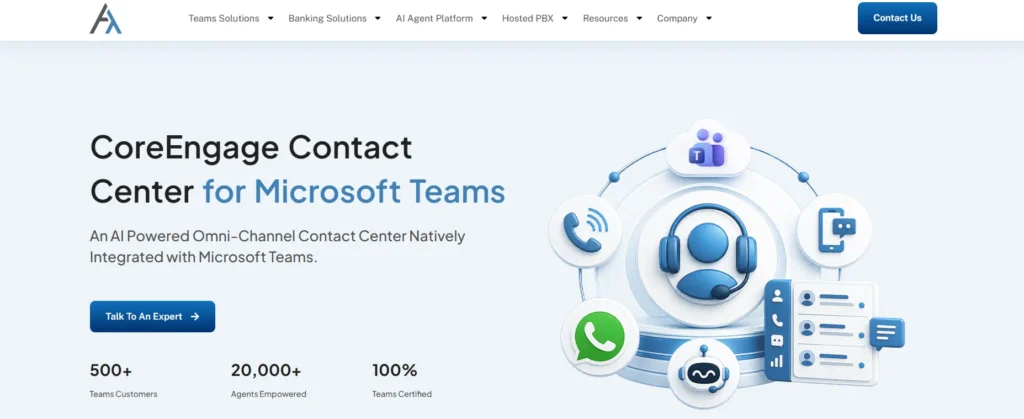
Altigen CoreEngage is an omnichannel contact center built natively into Microsoft Teams. It uses AI-powered conversation intelligence to analyze customer interactions, generate conversation summaries, and provide insights into customer sentiment and agent performance.
Best for: Contact centers running on Microsoft Teams that want conversation intelligence without a second platform.
Key features:
- Conversation transcription and summaries powered by Azure AI
- Customer experience metrics analyzed through Power BI
- Unified communications within Microsoft Teams
- Deep Microsoft 365 integration
- Enterprise-grade security and reliability
- Simplifies IT operations and management
Pros:
- Agents stay inside Teams, so there is no second interface to adopt.
- Interaction data stays in your own Azure environment with your encryption keys.
- 99.99% platform uptime
- 30-40% reduction in cost per contact
- 25-30% increase in agent productivity
Cons: Contact centers not using Microsoft services can’t use it.
Pricing: Custom pricing
Read the Case Study: How Doble Engineering Enhances Communications with Microsoft 365 and Altigen
2. NICE CXone
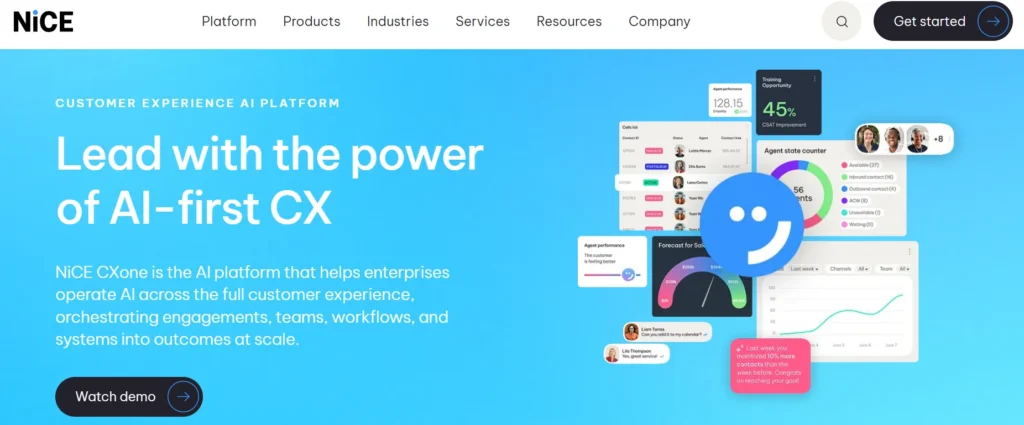
This is a cloud-based, AI-powered contact center platform that combines conversation intelligence, omnichannel engagement, analytics, and AI capabilities to help enterprises manage customer interactions across channels.
Best for: Large enterprises looking for conversation intelligence inside a full CCaaS platform.
Key features:
- Enlighten AI for automated scoring
- Real-time agent guidance
- AI-powered call center analytics
- Workforce management for advanced forecasting and scheduling
Pros:
- Depth across interaction quality analysis
- Built for high volume and complexity
Cons:
- Long procurement and implementation cycles
- Extensive platform capabilities can add complexity for mid-sized contact centers
Pricing: Custom pricing
3. Observe.AI
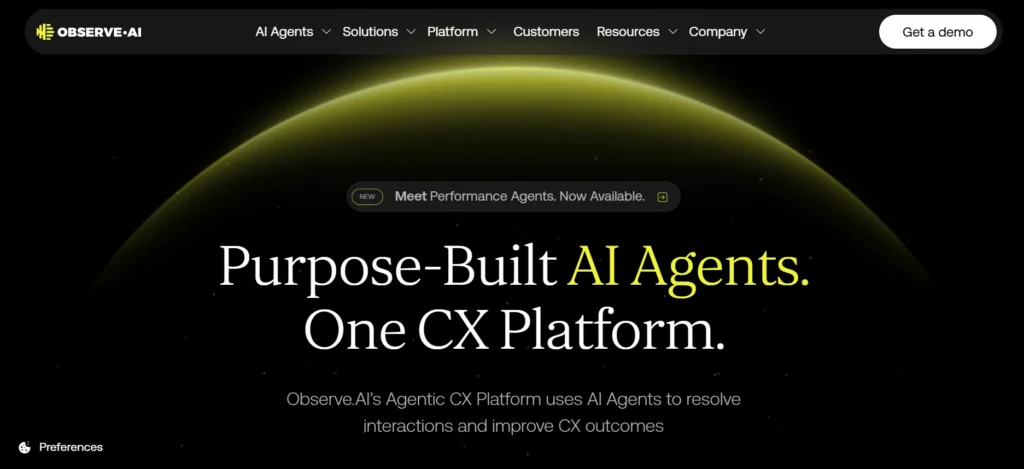
Observe.AI is another AI-powered conversation intelligence tool built specifically for contact centers. It analyzes customer interactions at scale and connects conversation data with quality assurance, coaching, real-time assistance, and operational insights.
Best for: Contact centers looking to automate QA and analyze interactions across their entire operation.
Key features:
- Auto QA with evidence linked to specific moments in conversations
- Cross-channel case stitching for a continuous customer journey
- Real-time Agent Assist with contextual prompts and alerts
- Contact-center-specific LLM for domain-specific conversations
Pros:
- Analyzes 100% of interactions rather than relying on samples
- Strong connection between QA findings and agent coaching
Cons:
- Primarily positioned for enterprise contact centers
- Broad AI capabilities may be more than smaller teams need
Pricing: Custom pricing
4. Talkdesk

Talkdesk can analyze customer interactions across voice and digital channels and connect those insights with quality management, agent assistance, and customer experience analytics.
Best for: Contact centers want conversation intelligence for enterprise-scale operations
Key features:
- Interaction and Quality Analytics for analyzing 100% of customer interactions
- AI-powered mood discovery and automatic topic discovery
- Root cause detection for recurring customer issues and friction points
- Talkdesk Copilot for real-time guidance and contextual recommendations
- Automated quality evaluations with customizable scorecards
Pros:
- Strong combination of interaction analytics and quality management
- Goes beyond basic sentiment analysis with mood, topic, and root-cause detection
Limitations:
- Some intelligence features are available in higher tiers or vertical product lines.
- Some advanced capabilities depend on the specific Talkdesk products or configuration included in the deployment
Pricing: From around $85 per user per month.
5. Dialpad
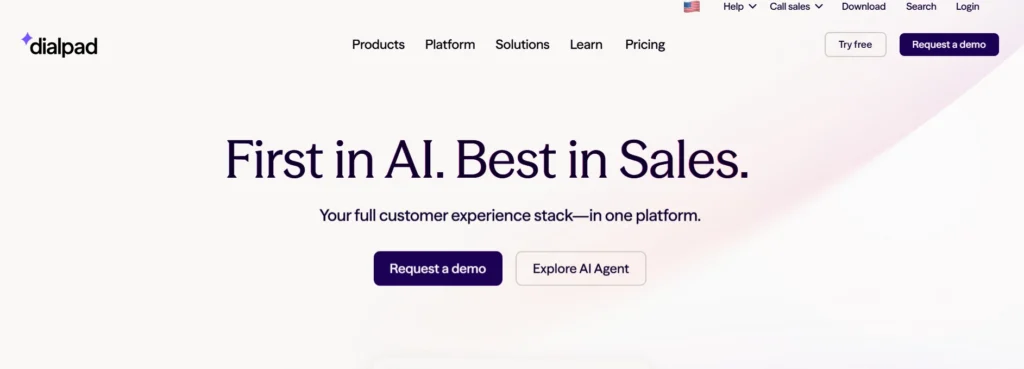
This conversation intelligence platform is built into Dialpad’s cloud communications and contact center solutions. It analyzes customer conversations in real time and after calls to provide transcripts, sentiment insights, summaries, coaching guidance, and customer experience data.
Best for: Contact centers looking for real-time conversation analysis.
Key features:
- Real-time transcription and sentiment analysis
- AI Live Coach for in-call guidance and suggested responses
- AI CSAT that infers customer satisfaction from conversations
- AI Scorecards for automated quality evaluations
- AI Recaps with summaries, key moments, and action items
Pros:
- Strong real-time assistance for agents and supervisors
- AI capabilities are built directly into the contact center platform
- AI CSAT can provide customer satisfaction insights without relying solely on survey responses
Limitations:
- May offer more than teams seeking conversation intelligence alone
- Some features depend on the plan or product package
Pricing. From $80 per user per month for the AI contact center tier.
6. Genesys
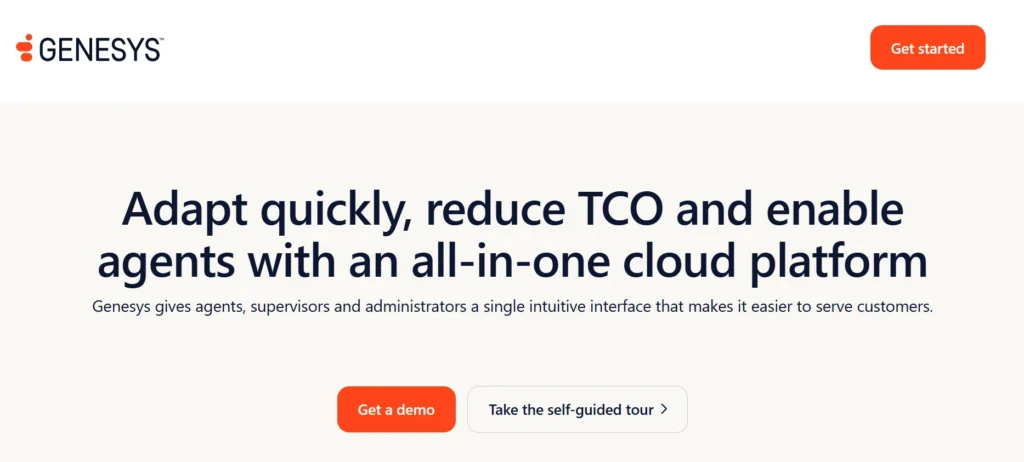
Genesys Cloud is a cloud-based contact center platform that combines conversation intelligence with skill-based routing, workforce engagement, analytics, and AI-powered customer experience capabilities. It analyzes interactions and customer context to provide insights, assist agents, and optimize customer journeys.
Best for: Enterprise contact centers that need conversation intelligence as part of a broader CX platform.
Key features:
- Speech and text analytics
- AI-powered Agent Copilot with real-time guidance
- Automated interaction summaries and wrap-up codes
- Predictive routing based on customer and agent context
- Journey analytics and real-time dashboards
Pros:
- Broad AI and contact center capabilities
- Strong support for complex, omnichannel operations
Limitations:
- Broad platform can be more than smaller teams need
- Advanced AI capabilities vary by subscription tier
Pricing: Custom pricing.
7. CloudTalk
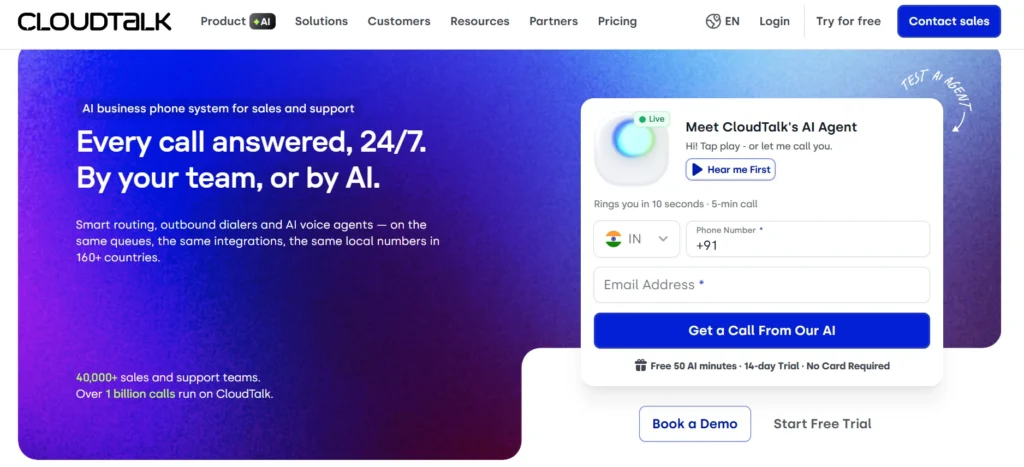
CloudTalk is a cloud-based business calling and contact center platform with built-in conversation intelligence for analyzing customer calls. It uses AI to transcribe, summarize, and analyze conversations, helping teams identify sentiment, recurring topics, and agent performance patterns.
Best for: Smaller contact centers that want a simple solution
Key features:
- AI call transcription, summaries, and smart notes
- Sentiment analysis and topic extraction
- AI call scoring for automated quality reviews
- Trending topics and talk/listen ratio
Pros:
- Easy-to-use conversation intelligence for smaller teams
- 70+ language/accent support
Limitations:
- User complaints about connectivity issues
- More voice-focused than broader omnichannel platforms
Pricing:
- Starter: $25/user/month (Billed annually)
- Essential: $29/user/month (Billed annually)
- Expert: $49/user/month (Billed annually)
- Conversation intelligence add-on around $9 per user
How conversation intelligence software helps contact centers
Improving customer experience is a leading business goal for 86% of contact centers. Conversation intelligence software turns customer conversations into data that contact centers can use to improve customer experience quality, coaching, and compliance. By analyzing interactions at scale, it gives supervisors visibility into issues that are difficult to spot through manual review alone.
Automate quality assurance
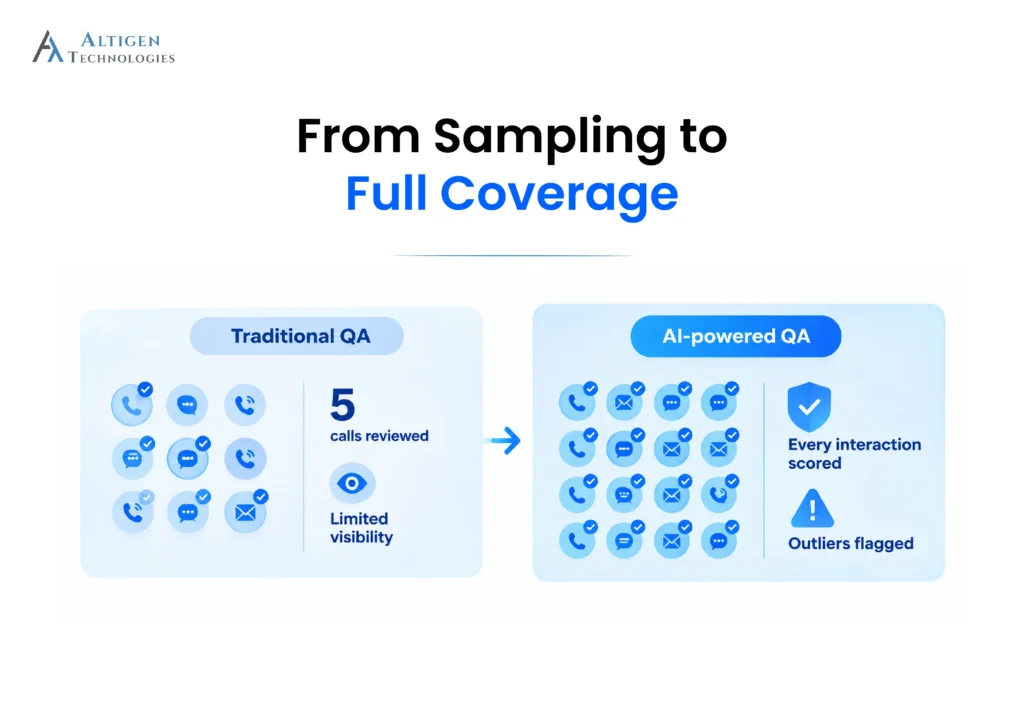
AI evaluates interactions against your existing scorecard, applying the same criteria to every conversation rather than the handful of calls.Instead of extrapolating agent performance from five calls a month, supervisors see every interaction scored, with outliers flagged for human review.
Improve agent coaching
Conversation data replaces impressions. A supervisor can see that an agent handles billing questions well but can’t handle angry customers well, with the specific call moments attached as evidence.
That provides coaching opportunities that help agents to work on specific areas.
Identify customer intent
Analysis across thousands of conversations shows why people are calling, which issues generate repeat contacts, which product changes triggered a volume spike, and which policies confuse customers.
This information usually sits outside the contact center’s reach, but conversation intelligence software can highlight these issues.
Monitor compliance
AI-powered compliance monitoring in conversation software checks whether required disclosures were read, whether prohibited language appeared, whether verification steps were completed, and whether sensitive information was handled correctly.
Analyze customer sentiment
Sentiment tracking helps contact center managers and agents understand where frustration builds inside a conversation. Tracking these trends across weeks reveals service issues before they appear in CSAT scores.
Reduce after-call work
Automated summaries, dispositions, and CRM updates help agents reduce manual effort and save a lot of time. A Salesforce report highlights that 70% of agents at underperforming service organizations toggle between screens to find information, compared with 36% at high performers. Automated documentation removes part of that switching.
What should you consider before choosing conversation intelligence software?
Before selecting conversation intelligence software, ask a few key questions to determine whether it fits your requirements.
- Does it cover all your channels? Voice-only analysis misses chat and email, which may carry more volume than you think.
- Can it analyze a large share of your interactions? Ask for the actual coverage rate, not the marketing claim. Some platforms analyze every interaction, others take samples.
- Can you customize scorecards? Your quality criteria are specific to your business. Generic templates produce generic scores.
- Does it provide real-time and post-interaction insight? Decide which you need before demos, because platforms lean one way.
- Does it integrate with your contact center and CRM? Ask whether the connector is vendor-built and vendor-supported or runs through middleware.
- Does it meet your security requirements? Confirm encryption, data residency, redaction of sensitive data, and certifications your sector requires.
- Can it scale with volume? Ask how pricing and performance change when the interaction volume increases significantly.
How much does conversation intelligence software cost?
Most conversation intelligence software follows four pricing models.
- Per agent or per user: The most common, running roughly $19 to $150 monthly depending on tier.
- Usage-based: Priced per minute or per interaction, which suits fluctuating volume
- Platform fee plus users: A base charge with per-seat licenses on top
- Custom plans: Quote-based plans based on requirements
Several factors move the total beyond the seat rate. Agent count, interaction volume, how many channels you analyze, which AI features you turn on, recording storage and retention, integration work, implementation services, and advanced QA or compliance modules.
Ask every vendor for a 12-month total at your actual volume rather than a per-seat number.
Final takeaway
Transcription is the easy part now. What separates these platforms is whether the analysis reaches someone who can act on it, and how quickly.
Start with your gap. QA coverage, compliance exposure, coaching quality, or contact reasons you cannot explain. That answer can narrow this list faster than any feature comparison.
For contact centers already running Microsoft Teams, Altigen CoreEngage tracks customer experience metrics inside the tools your team uses daily, with no second platform to learn.
Contact Altigen for a demo to see how CoreEngage fits your contact center.
Frequently asked questions
A conversation intelligence tool captures interactions across voice and digital channels, transcribes them, then analyses them using AI to identify topics, intent, sentiment, and compliance signals. It scores interactions against your criteria and surfaces patterns across the full volume rather than a sample.
Speech analytics analyzes recorded voice, usually through keyword spotting and phrase detection. Conversation intelligence covers voice and digital channels, understands context and intent rather than keywords, and connects findings to coaching, scoring, and real-time guidance.
Yes, most platforms are built for omnichannel support. Altigen’s CoreEngage supports omnichannel customer services across voice chat and emails. Confirm coverage during evaluation, as some platforms are only voice-first with limited digital analysis.
It scores every interaction against your scorecard instead of the small sample manual review allows. Supervisors review flagged outliers rather than random calls, and agents receive consistent scoring rather than results that vary by evaluator.
This feature can vary from one provider to another. Some platforms offer real-time assistance and provide knowledge articles, prompts required disclosures, and alerts when sentiment changes in the middle of the conversation. Others analyze only after interactions end. Check this with providers when shortlisting.
By showing why customers contact you and where conversations go wrong. Contact reason analysis identifies issues generating repeat contacts, sentiment tracking flags frustration before it becomes churn, and coaching insight raises the quality of the next interaction.
The leading conversation intelligence platforms offer robust security and comply with regulations. Altigen’s CoreEngage encrypts data in transit and at rest, redact sensitive information including card and account numbers. CoreEngage is also ISO 27001 certified and GDPR and NIS2 – SC-30 and SOC2 compliant.